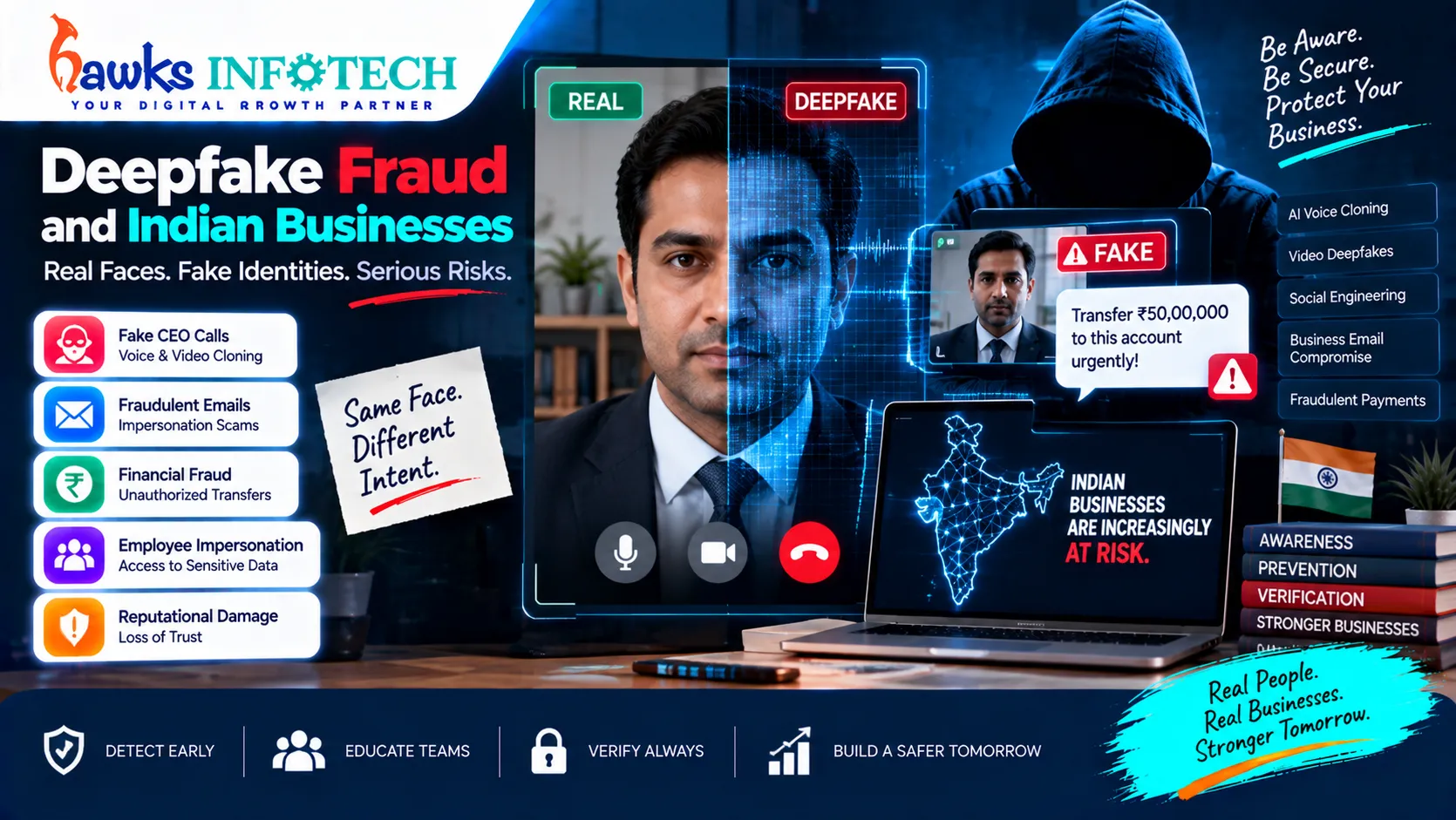
India's rapid digital transformation has made it an economic powerhouse—but it has also placed Indian corporations, startups, and SMEs directly in the crosshairs of global cybercrime cartels. In 2026, one of the most insidious threats confronting Indian boardrooms is synthetic media fraud (deepfakes). Gone are the days when fraud arrived as poorly formatted emails; today, Indian finance departments face real-time cloned video calls on Microsoft Teams, audio voice memos from synthetic Managing Directors, and fabricated video press releases designed to manipulate stock prices and siphon corporate funds.
Corporate Impersonation
Over ₹450 Crore in fraudulent wire transfers were attempted across Indian commercial enterprises in the past year alone using synthetic video and audio avatars.
Legal & Compliance Urgency
Indian regulatory bodies (CERT-In and MeitY) mandate strict digital forensics and out-of-band transaction approvals under the Digital Personal Data Protection framework.
Supporting Deep-Dive Guide
Master Pillar: AI-Powered Cybersecurity Threats in 2026
Table of Contents
Direct Answer: How can Indian businesses protect against deepfake fraud?
To protect against deepfake deception, Indian enterprises must: 1) Implement mandatory out-of-band two-person authorization for wire transfers over ₹5 Lakhs, 2) Establish private internal verbal passphrases for sensitive executive commands, 3) Train finance staff to spot synthetic artifacts, and 4) Partner with a trusted IT provider for comprehensive cybersecurity defense.
1. The Rise of Deepfake Fraud in India: The New Face of Corporate Crime
India's rapid digitization, widespread adoption of real-time payment rails (UPI, RTGS, IMPS), and heavy reliance on WhatsApp for corporate coordination have created fertile ground for synthetic fraud.
In 2026, deepfake scams in India are no longer crude video clips circulating on social media. Criminals deploy real-time audio and video synthesis in targeted corporate espionage. By scraping public interviews, television appearances, and podcast episodes of Indian CEOs, founders, and CFOs, attackers construct hyper-realistic digital avatars that mimic Indian regional accents, Hindi/English conversational cadences, and idiosyncratic speech mannerisms with uncanny precision.
This threat vector builds directly upon the offensive techniques analyzed in how hackers are using AI and represents a specialized subset of AI-powered cybersecurity threats.
2. Real-World Case Studies: Indian Corporate Targets
Case 1: The Mumbai Conglomerate Video Call Heist
An accounts executive joined a scheduled Microsoft Teams video call with what appeared to be the Group CFO and three senior external legal counsel. Every participant on the screen—except the victim—was an AI-generated synthetic avatar. The executive authorized a ₹18.5 Crore cross-border acquisition escrow transfer before discovering the genuine CFO was on a commercial flight.
Case 2: The Gurgaon IT Firm Voice Memo
A finance manager received an urgent WhatsApp audio note in the exact voice of the company's founder requesting an emergency payment to an overseas cloud software vendor. The audio note referenced a live board meeting happening that exact morning, exploiting the manager's reluctance to interrupt the founder.
3. How Attackers Craft Convincing Indian Deepfakes
Synthesizing an authentic corporate deepfake requires three tactical components:
- Acoustic Model Training: Attackers extract clean 24kHz audio from YouTube conference talks or investor earnings calls to clone speech timbre, pitch, and breathing rhythm. For audio defense tactics, see AI voice scams and business security.
- Latent Diffusion Video Models: Generative video models map the victim's face onto a live actor in real time, synchronizing lip movements with synthesized audio.
- Contextual Intelligence (OSINT): Attackers monitor Indian corporate filings on the Ministry of Corporate Affairs (MCA) portal, GST registries, and LinkedIn announcements to craft scenarios referencing real clients, active contracts, and authentic bank branches.
4. Legal & Regulatory Landscape: CERT-In & IT Act Compliance
Indian law enforcement and regulatory authorities have instituted stringent reporting mandates for cyber fraud:
- CERT-In Mandatory 6-Hour Reporting: Organizations experiencing deepfake impersonation or financial cyber incidents must report the event to the Indian Computer Emergency Response Team within 6 hours.
- Section 66D of the IT Act: Punishes cheating by personation using computer resources with imprisonment up to three years and substantial fines.
- Digital Personal Data Protection Act (DPDPA): Mandates that corporate data fiduciaries implement reasonable security safeguards to prevent employee data leakage that facilitates synthetic identity theft.
5. Multi-Layered Corporate Defense Protocol
Technology alone cannot stop deepfake fraud; you must redesign operational workflows:
- The "Duress Passphrase" Protocol: Establish a confidential verbal code phrase known only to authorized financial signatories. If an executive calls requesting an urgent transaction, they must state the passphrase.
- Mandatory Out-of-Band Callbacks: Never complete a financial transaction based on an incoming call. The employee must hang up and independently call back the executive on their registered private cellular line.
- Dual-Authorization Thresholds: Configure banking portals so all RTGS and NEFT transfers exceeding ₹5 Lakhs require two independent digital signatures using hardware security tokens.
- Visual Artifact Inspection: Train staff to look for unnatural blinking, distorted ear boundaries, audio-lip sync delays, and robotic pauses during video meetings.
6. Technical Verification Checklist for Finance Teams
- ✓ Challenge Questions: Ask the caller an unscripted, non-work-related question only the genuine executive would know (e.g. "What did we have for lunch at Tuesday's client dinner?").
- ✓ Profile Disambiguation: Verify the caller's incoming phone number against company records. Synthetic callers frequently use spoofed caller IDs or newly registered SIM cards.
- ✓ Bank Account Whitelisting: Never transfer funds to newly modified vendor bank accounts without written confirmation from the vendor's chief financial officer verified through established channels.
7. Frequently Asked Questions
Can deepfake detection software reliably detect synthetic video on live calls?
Real-time deepfake detection tools analyze facial micro-movements, lighting inconsistencies, and spectral audio distributions. While effective at flagging known generative models, attackers continuously adapt. Therefore, technical detection must always be paired with operational out-of-band verification policies.
What should an Indian business do immediately if it falls victim to deepfake fraud?
Immediately contact your bank's fraud desk to request an urgent recall/freeze of the RTGS/NEFT transaction. Simultaneously file an incident report on the National Cyber Crime Reporting Portal (cybercrime.gov.in) and notify CERT-In within 6 hours.
Are small businesses at equal risk of deepfake fraud in India?
Yes. SMEs in industrial hubs like Delhi NCR, Surat, and Coimbatore are frequently targeted with fake vendor invoices and cloned supplier WhatsApp voice notes because their financial approval hierarchies are less formalized than large public enterprises.
Topical Cluster: AI-Powered Cybersecurity & Threat Defense
Explore the complete interconnected network of pillar guides and specialized deep-dive articles in this domain:

AI-Powered Cybersecurity Threats in 2026
Explore the comprehensive master guide that unifies all AI-Powered Cybersecurity & Threat Defense strategies.


