Backup & Disaster Recovery

Expert articles and technical strategies for Backup & Disaster Recovery

How to Recover Data from a Dead Laptop
Backup & Disaster Recovery

How to Recover Data from a Dead Laptop

To recover data from a dead laptop that won't turn on: first determine if the storage drive is removable (SATA SSD/HDD or M.2 NVMe). Remove the drive and insert it into an external USB enclosure, then plug it into a working computer to copy your files. If the laptop powers on but won't boot Windows, boot from a Linux Live USB to access the filesystem. For laptops with soldered storage (like modern MacBooks) or clicking mechanical drives, professional clean-room micro-soldering is required.

Cloud Backup vs Local Backup
IT Support Hardware & Software Support Server & Cloud Management Backup & Disaster Recovery

Cloud Backup vs Local Backup

Local backup provides near-instantaneous multi-gigabit recovery speeds for large files but is vulnerable to physical disasters and local ransomware. Cloud backup provides offsite disaster immunity and automatic scalability but relies on internet bandwidth. The optimal strategy is a Hybrid Backup approach (3-2-1 rule): combining local NAS for fast operational restores with automated encrypted cloud snapshots for total disaster protection.

Why Every Business Needs Regular Data Backup
IT Support Hardware & Software Support Server & Cloud Management Backup & Disaster Recovery

Why Every Business Needs Regular Data Backup

Every business needs regular automated data backup because data loss is guaranteed over time through hardware breakdown, ransomware, human error, or natural disaster. Following the 3-2-1 rule—keeping 3 copies of data across 2 media types with 1 immutable offsite cloud snapshot—guarantees that your business can recover operations within hours instead of facing bankruptcy.

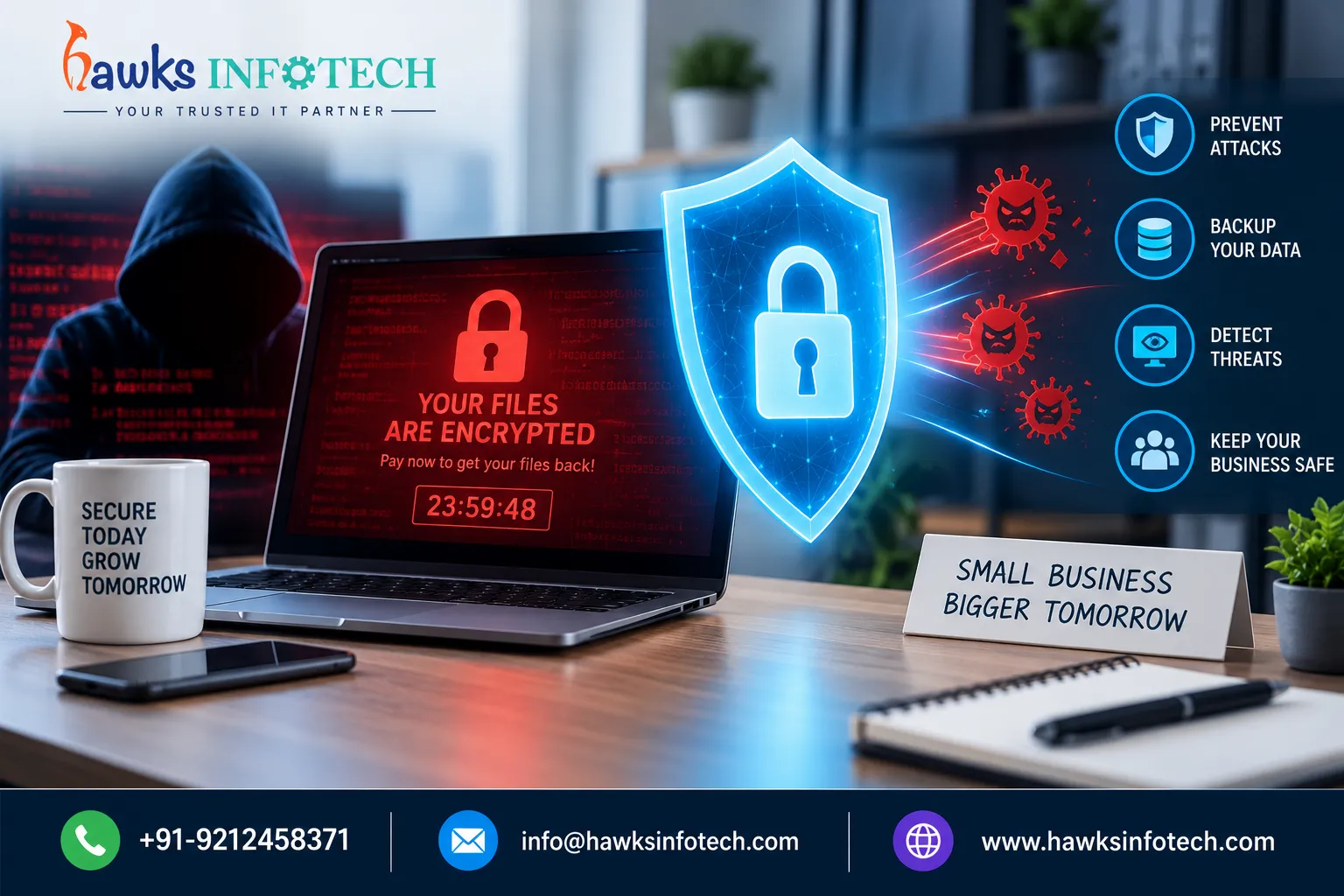
Ransomware Protection for Small Businesses
Backup & Disaster Recovery

Ransomware Protection for Small Businesses

Ransomware protection for small businesses requires a multi-layered defense: deploying Next-Gen Endpoint Detection and Response (EDR), enforcing multi-factor authentication (MFA) on all remote access ports, conducting weekly phishing simulations, and maintaining immutable (write-once-read-many) offsite cloud backups following the 3-2-1 backup rule.

Chat on WhatsApp Call Us Now

Talk to an Expert