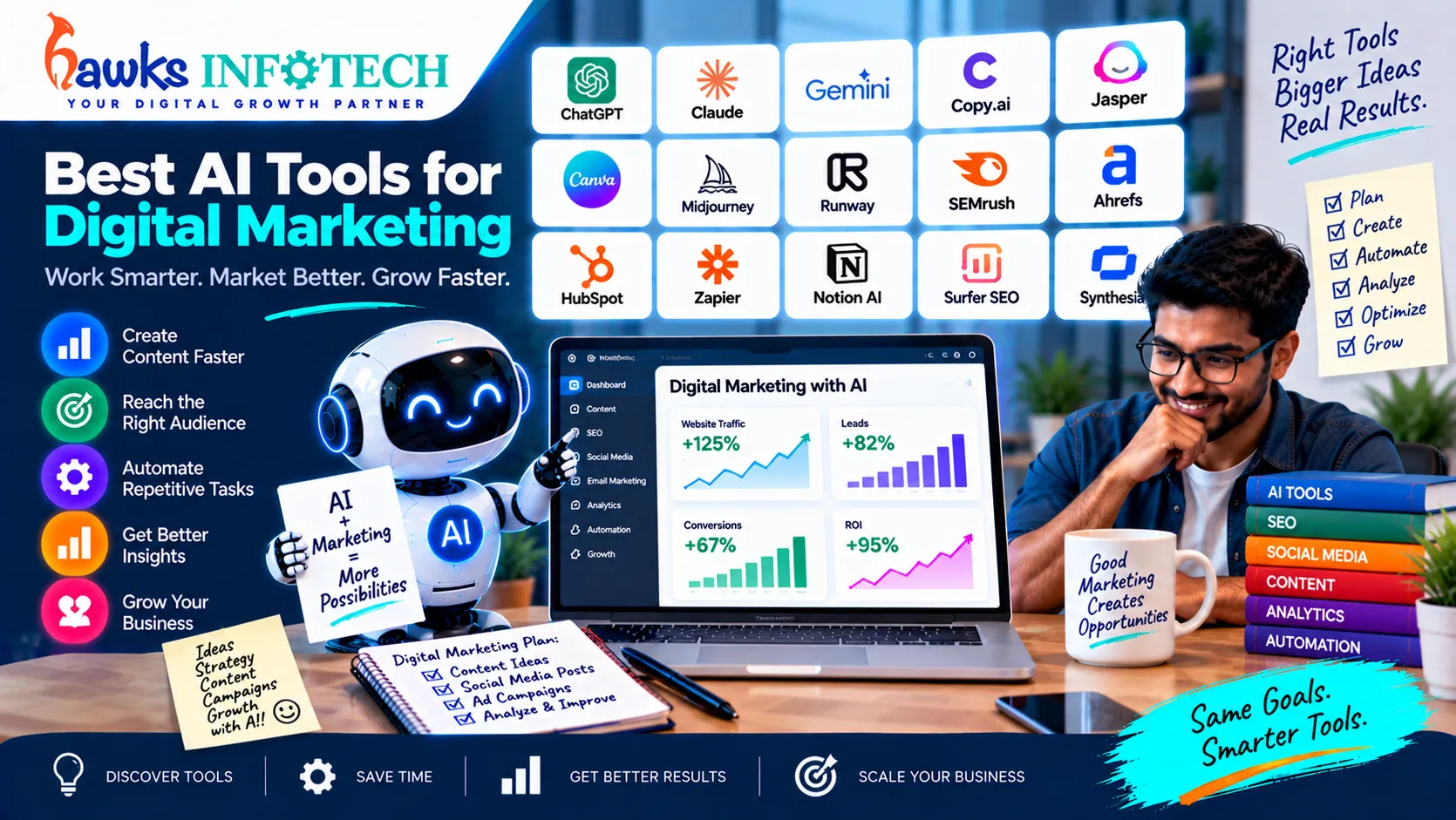
In 2026, the digital marketing technology landscape has reached peak saturation. Over ten thousand software applications claim to utilize artificial intelligence, but only a selective tier of purpose-built platforms deliver genuine operational leverage, measurable customer acquisition cost (CAC) reduction, and scalable revenue growth. Whether you are leading a growth team at an established enterprise or managing multi-channel campaigns for a high-growth startup, assembling an integrated, modern AI marketing tech stack is no longer an experimental luxury—it is the foundational prerequisite for market relevance.
Stack Modernization
High-performance marketing teams prioritize platforms that natively integrate generative LLMs with predictive analytics, CRM databases, and autonomous ad bidding systems.
Measurable Efficiency Gains
Early adopters report a 65% reduction in creative iteration turnaround times and a 2.4x improvement in paid campaign return on ad spend (ROAS).
Supporting Deep-Dive Guide
Master Pillar: AI in India 2026
Table of Contents
Direct Answer: What are the best AI digital marketing tools in 2026?
The top-tier marketing stack in 2026 includes: AdCreative.ai and Pencil for automated ad variation generation; Surfer SEO and Hawks GEO Toolkit for generative search engine optimization; Klaviyo AI and Customer.io for predictive customer lifecycle email workflows; OpusClip and Runway Gen-3 for programmatic social video creation; and Triple Whale for AI-driven multi-touch attribution.
1. The 2026 AI Marketing Architecture: Essential Pillars
Deploying isolated, disjointed AI tools leads to fragmented customer data, conflicting brand voices, and administrative bloat. Modern digital marketing departments organize their tool stack across five interdependent functional pillars:
- Creative Synthesis: Autonomous generation of ad banners, social carousels, and high-retention video variations.
- Search & Discovery Intelligence: Optimizing digital footprint for both traditional Google algorithms and modern generative answer engines.
- Lifecycle & Retention Personalization: Real-time behavioral triggers across email, SMS, and messaging apps based on predictive churn probability.
- Community & Social Engagement: Predictive listening, automated DM sales funnels, and trend interception, as explored in our guide on how AI is changing social media marketing.
- Attribution & Decision Intelligence: Algorithmic modeling that tracks multi-channel touchpoints despite third-party cookie deprecation and privacy sandboxes.
2. Top AI Tools for Paid Advertising & Creative Generation
With ad platforms like Google Ads and Meta Ads relying on black-box algorithmic bidding, your creative quality and volume are the primary levers for driving high ROAS. These platforms solve the creative bottleneck:
1. AdCreative.ai Paid Social & Display
Trained on millions of high-converting visual advertisements, AdCreative.ai generates hundreds of on-brand banner variations in seconds. The platform assigns each asset a predictive conversion score based on visual hierarchy, typography contrast, and logo placement before you publish.
Best For: E-commerce brands and agencies scaling Meta, Google Display, and LinkedIn ads.
2. Pencil (Brandtech Group) Enterprise Video Ads
Pencil connects directly to enterprise ad accounts to analyze historical performance data, automatically generating new video ad variations predicted to beat current campaign benchmarks. Its machine learning engine continuously learns which messaging angles resonate best with specific customer segments.
Best For: Mid-market and enterprise direct-to-consumer (DTC) brands with significant monthly ad spend.
3. Leading AI Platforms for SEO & Generative Search (GEO)
Search optimization in 2026 requires balancing two distinct discovery channels: traditional organic search engine results pages (SERPs) and AI answer engines like ChatGPT Search, Perplexity, and Google AI Overviews.
- Surfer SEO & Clearscope: Utilizing real-time NLP algorithms to analyze top-ranking content entities, keyword density ratios, and semantic topic gaps, ensuring written content matches the depth and authority expected by Google's helpful content algorithms.
- Perplexity AI & Claude 3.5 Sonnet: Essential for reverse-engineering how AI answer engines formulate syntheses and identifying citation sources. Learn more about specialized tools in our review of AI SEO tools for businesses.
- Generative Engine Optimization (GEO) Frameworks: To ensure your brand is cited inside AI overviews, consult our comprehensive blueprint on Generative Engine Optimization (GEO).
4. Best AI Tools for Email Automation & Lifecycle Marketing
Mass broadcast emails sent to entire database lists are largely filtered into spam or promotion folders by modern email service providers. Contemporary email marketing demands 1-to-1 dynamic personalization at scale:
Klaviyo AI
Features predictive customer lifetime value (pCLV) modeling, churn risk forecasting, and automated send-time optimization that delivers emails when individual subscribers are historically most likely to open.
Customer.io Data Pipelines
Integrates real-time product usage events with behavioral trigger workflows, automatically personalizing onboarding sequences and upgrade prompts based on app feature adoption.
5. Video & Social Content Production Engines
Creating viral vertical video assets for Instagram Reels, TikTok, and YouTube Shorts no longer requires an in-house film studio or extensive editing timelines:
- OpusClip: Programmatically converts long-form podcasts, product webinars, and interviews into captioned, hook-optimized short video reels with automated face tracking.
- HeyGen & Synthesia: Enterprise-grade synthetic avatar generators that allow teams to create localized training videos and customer onboarding walkthroughs in over 40 languages without hiring on-camera actors.
- Descript: A revolutionary podcast and video editing workstation that allows creators to edit video footage simply by editing the text transcript, removing filler words automatically.
6. Feature Matrix & Pricing Comparison Table
| Tool Name | Primary Use Case | Key AI Capability | Typical Pricing |
|---|---|---|---|
| AdCreative.ai | Paid Social Creative | Predictive scoring & banner generation | $29 – $149/mo |
| Surfer SEO | Organic Search & Content | SERP NLP entity modeling & outline builder | $89 – $299/mo |
| Klaviyo AI | Email & Retention | Predictive CLV & churn forecasting | Tiered by contact volume |
| OpusClip | Social Video Repurposing | Hook score detection & auto-reframing | $9 – $29/mo |
| Triple Whale | Attribution & Analytics | First-party pixel & algorithmic MMM modeling | $129 – $499/mo |
7. Building an Integrated AI Marketing Workflow
To extract true enterprise value from these tools, avoid operating them in silos. High-growth organizations link their applications using automated integration webhooks:
- Ingest Customer Insights: Scrape customer review data, support tickets, and sales call transcripts to extract authentic customer pain points and phrasing.
- Generate Multi-Channel Creative: Pass these insights into generative tools like AdCreative.ai and Claude to produce twenty ad angles and blog outlines.
- Automate Cross-Platform Deployment: Use automation engines like Make or Zapier to push approved copy into email flows and CMS platforms automatically, as detailed in our guide on AI automation ideas for small businesses.
- Continuous Closed-Loop Optimization: Feed ad conversion metrics back into your analytics dashboard to systematically double down on winning creative structures.
8. Frequently Asked Questions
Can AI digital marketing tools work without an experienced marketer?
No. AI tools are force multipliers, not autonomous marketing directors. Without strategic market positioning, accurate customer segmentation, compelling value propositions, and rigorous human review, AI will simply generate high volumes of mediocre, non-converting assets at rapid speed.
How much should a growing company budget for an AI marketing stack?
A lean, highly effective modern marketing stack typically costs between $300 and $800 per month, covering creative generation, SEO research, video editing, and email automation. This small investment often replaces thousands of dollars in manual freelance production costs.
Are there specialized AI tools for local and regional Indian businesses?
Yes. Indian businesses benefit significantly from platforms supporting regional Indian languages, WhatsApp business automation APIs, and hyper-local citation mapping, which we explore in detail in our review of best AI tools for Indian businesses.
Topical Cluster: Digital Marketing & AI in India Ecosystem
Explore the complete interconnected network of pillar guides and specialized deep-dive articles in this domain:

AI in India 2026
Explore the comprehensive master guide that unifies all Digital Marketing & AI in India Ecosystem strategies.


