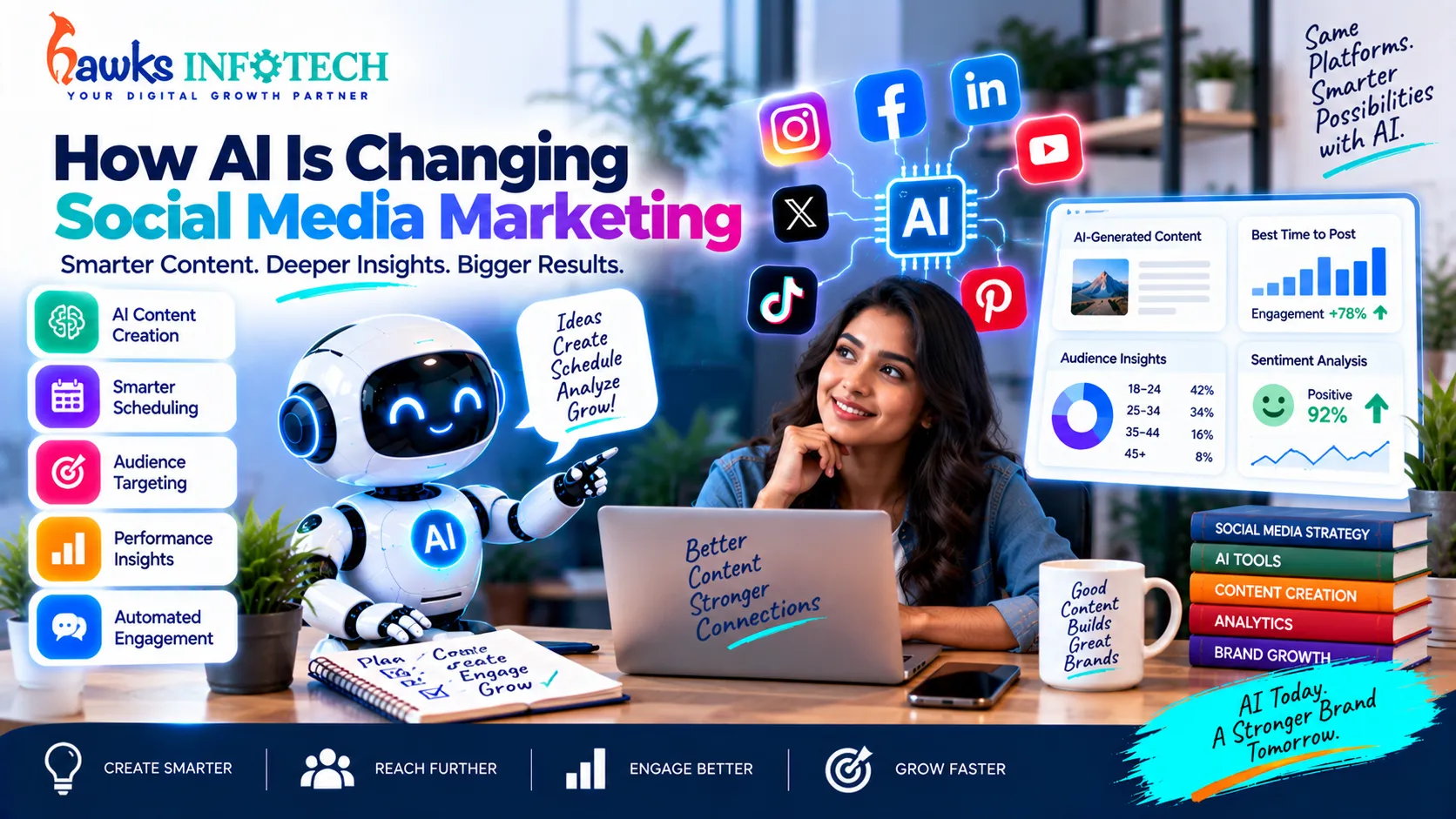
Social media marketing in 2026 has crossed an unprecedented technological threshold. The traditional cadence of social media management—brainstorming weekly calendar spreadsheets, manually writing captions, editing reels in standalone desktop software, and reacting to user comments hours after they are posted—is hopelessly inadequate in an era governed by sub-second algorithmic recommendation engines. Today, artificial intelligence has evolved from a simple copywriting assistant into an end-to-end social media operating engine capable of predictive trend discovery, autonomous creative synthesis, real-time community sentiment analysis, and closed-loop performance optimization.
Generative Multimodal Content
Modern social teams produce dozens of high-performing vertical video variations daily using AI video engines that script, voice, animate, and subtitle content in minutes.
Predictive Algorithmic Matching
AI algorithms predict virality probability, optimal posting windows, and audience retention drop-off points before a single ad dollar or organic post is published.
Supporting Deep-Dive Guide
Master Pillar: AI in India 2026
Table of Contents
Direct Answer: How is AI changing social media marketing in 2026?
In 2026, AI has transitioned social marketing from manual creative labor to automated intelligence systems. AI tools autonomously generate multi-format short video reels, monitor cultural trends to predict rising audio/topics, dynamically personalize ad creative for micro-audiences, and handle instant customer support inside Instagram, WhatsApp, and LinkedIn direct messages—enabling lean teams to match the output and responsiveness of global marketing agencies.
1. The Shift from Reactive Posting to Predictive Social Media
For over a decade, social media marketing operated on retrospective analytics. Growth teams reviewed monthly dashboards to determine which Instagram carousels or LinkedIn text posts generated the most impressions, then attempted to replicate that success weeks later. In 2026, algorithmic platforms like TikTok, Instagram Reels, YouTube Shorts, and LinkedIn have evolved so rapidly that looking backward is a recipe for stagnation.
Machine learning platforms now ingest millions of real-time signals—sound bites, micro-meme structures, camera pacing patterns, comment sentiment velocities, and creator engagement spikes—to deliver predictive recommendations. Instead of asking "What worked last month?", social strategists now evaluate "What audio cadence will peak across our target demographic over the next 72 hours?"
This predictive capability ensures marketing teams align their creative production with algorithmic momentum, maximizing organic reach before a trend saturates. This methodology works hand-in-hand with broader digital transformations, such as how search engines are evolving as detailed in our guide on how AI is changing SEO in 2026.
2. Autonomous Short-Form Video & Creative Generation
Video is no longer optional; it is the fundamental currency of modern social networks. However, producing high-retention video content historically represented the largest operational bottleneck for growing businesses. AI video generation pipelines have completely dismantled this barrier.
In 2026, marketing teams deploy sophisticated creative orchestration workflows:
- Long-Form to Micro-Clip Repurposing: AI systems ingest long-form webinars, podcast interviews, and product demos, automatically identifying viral hooks, trimming dead silence, centering speakers, generating dynamic animated subtitles, and formatting clips into 9:16 vertical reels.
- Synthetic Voice & Multilingual Localization: Video campaigns recorded in English are seamlessly dubbed into Hindi, Spanish, French, and regional Indian dialects using voice-preserving synthetic dubbing with automated lip-sync alignment, exponentially broadening target reach.
- Algorithmic B-Roll & Visual Synthesis: Generative video models insert relevant cinematic background footage and kinetic typography matched precisely to spoken transcript keywords, maintaining viewer retention past the critical three-second threshold.
By reducing production timelines from days to minutes, businesses can test twenty creative concepts simultaneously rather than betting their entire quarterly campaign budget on a single promotional video.
3. AI Community Management & Real-Time Sentiment Response
Social media algorithms heavily reward creators and brands that foster immediate two-way conversations in the comments and direct messages. When prospective buyers inquire about pricing, delivery windows, or technical specifications on an Instagram post, waiting four hours for a human community manager to reply destroys conversion momentum.
AI community management agents have replaced rigid, frustrating keyword auto-responders with nuanced, brand-aligned conversational bots:
Contextual In-Comment Replies
AI identifies comment intent—distinguishing between technical praise, product queries, and trolling—and generates on-brand, witty, or helpful replies within seconds.
Direct Message Sales Funnels
Autonomous DM assistants qualify leads who type trigger words, share product links, capture emails, and book consultations directly inside Instagram and LinkedIn.
Real-Time Crisis Escalation
Sentiment analysis algorithms immediately flag rising PR risks, negative customer experiences, or boycott hashtags, alerting executive leadership before public escalations occur.
This high-velocity responsiveness directly fuels inbound sales pipelines, mirroring principles discussed in our research on AI lead generation for small businesses.
4. Predictive Trend Listening & Social Search Optimization
A monumental change in social user behavior is the rise of social networks as primary search engines. Gen Z and millennial consumers increasingly search for product recommendations, local restaurants, software reviews, and how-to guides directly on TikTok, Instagram, and Reddit rather than traditional search engines.
Consequently, social media marketing has converged with search optimization:
- Social Semantic Keyword Optimization: AI tools analyze high-intent search queries inside social search bars, optimizing video spoken transcripts, captions, and on-screen text overlays to ensure brand videos rank at the top of social search results.
- Cross-Platform Competitor Intelligence: Machine learning scrapers analyze competitor ad libraries and organic post velocity, pinpointing creative fatigue and gaps where competitor audience segments are underserved.
- Audio Fingerprinting & Early Trend Adoption: By monitoring velocity changes in background audio usage before sound tracks hit official top charts, brands can ride organic algorithmic waves during their exponential growth phase.
5. Hyper-Personalized Paid Social Campaigns
In paid social advertising (Meta Ads, TikTok Ads, LinkedIn Campaign Manager), manual ad set splitting and manual audience targeting have been replaced by native AI recommendation engines like Meta Advantage+ and TikTok Smart Performance Campaigns.
Success in 2026 is entirely governed by creative diversity. Instead of testing two ad creatives with twenty targeted interest groups, modern performance marketers provide the AI with one broad audience and forty distinct creative variations:
| Campaign Dimension | Traditional Social Ads (2020-2023) | AI-Powered Social Ads (2026) |
|---|---|---|
| Audience Targeting | Manual interest layering, job titles, lookalike percentages | Broad/Open targeting; algorithm uses creative messaging to find buyers |
| Creative Iteration | 2-4 static banners or single high-budget video per quarter | 20-50 modular AI video variations testing different hooks and pain points |
| Copywriting & Headlines | Single static caption written by copywriter | Dynamic text optimization pairing tailored hooks to individual user browsing intent |
| Budget Allocation | Manual daily spend adjustments across ad sets | Real-time algorithmic rebalancing shifting budget to top ROAS assets in seconds |
To explore the complete software ecosystem powering these capabilities, consult our curated index of the best AI tools for digital marketing.
6. The Human-in-the-Loop Imperative: Authenticity vs Automation
While AI delivers unprecedented scale and execution speed, unconstrained automation carries severe brand risks. Audiences in 2026 are highly sensitive to synthetic, generic content. Social accounts flooded with low-effort ChatGPT captions, robotic voiceovers, and unnatural AI-generated avatars experience steep declines in engagement and community trust.
The winning social media formula in 2026 is AI-Supercharged Human Authenticity:
- Human Founders & Creators at the Core: Record genuine founder stories, behind-the-scenes engineering challenges, and authentic client interviews. Use real humans for the initial capture.
- AI as the Production Engine: Deploy AI to transcribe, edit, format, repurpose, create hooks, schedule, and distribute that core human story across every social channel.
- Strict Brand Guardrails: Every AI-generated caption or creative draft must undergo human review before public distribution to verify tone, factual accuracy, and alignment with corporate values.
7. Frequently Asked Questions
Will AI replace human social media managers?
AI will not replace great social media managers, but social media managers who master AI will replace those who do not. AI handles tedious production, scheduling, and data crunching, freeing creative strategists to focus on storytelling, high-level brand positioning, and authentic community relationships.
Do social algorithms penalize content generated by AI?
No. Social algorithms do not penalize content simply because it was created with AI tools; algorithms reward viewer retention, watch time, shares, and meaningful comments. If your AI content is engaging and valuable, it will succeed. If it is generic and boring, audiences will swipe away, leading to algorithmic suppression.
How can small businesses get started with AI social media marketing on a budget?
Start with high-leverage micro-tools: use OpusClip or Descript to transform long customer conversations or webinars into vertical video clips, deploy Canva AI or Midjourney for visual assets, and utilize ChatGPT or Claude for brainstorming twenty hooks based on customer FAQs.
Topical Cluster: Digital Marketing & AI in India Ecosystem
Explore the complete interconnected network of pillar guides and specialized deep-dive articles in this domain:

AI in India 2026
Explore the comprehensive master guide that unifies all Digital Marketing & AI in India Ecosystem strategies.


